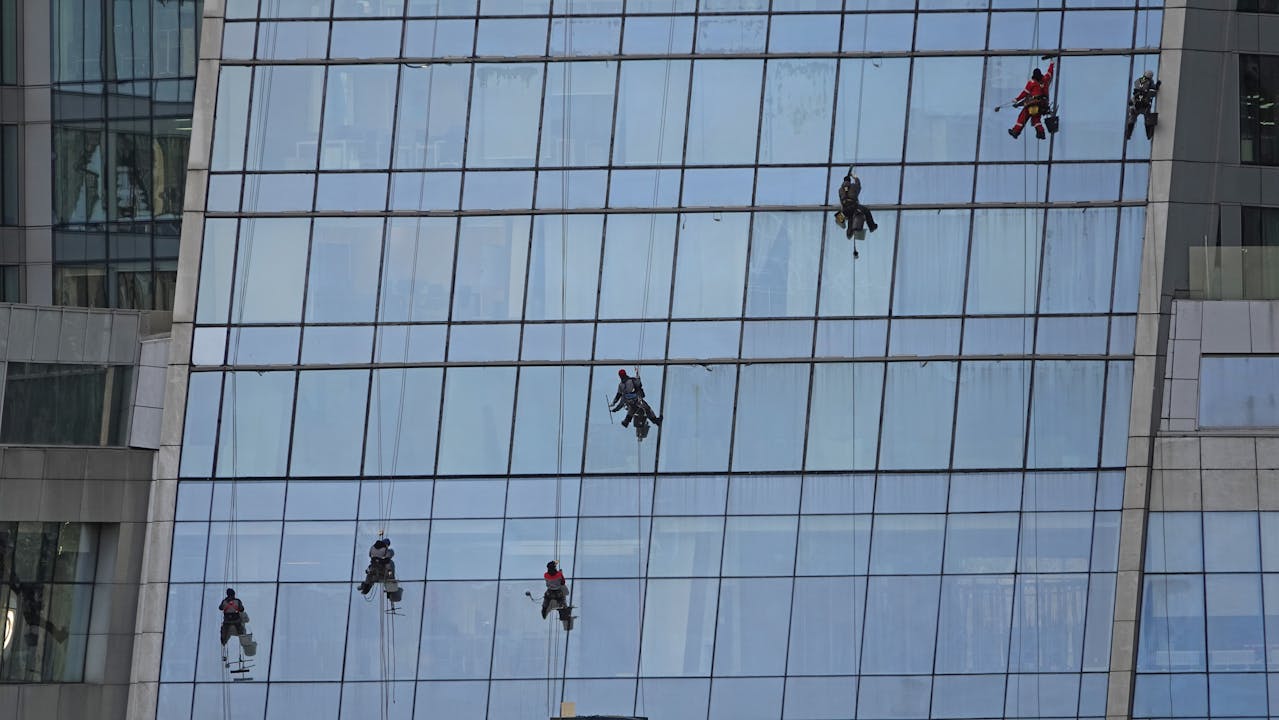
Most building owners and facility managers do not have a set schedule for facade cleaning — they just wait until something looks noticeably wrong. That is a reasonable approach in theory, but in practice, the "noticeably wrong" point often comes later than it should.
By the time a facade looks visibly bad from the street, the cleaning job is already harder, more expensive, and less likely to fully restore the original appearance. Some forms of damage that set in with prolonged neglect — glass etching, deep biological staining, oxidised ACP panels — are very difficult to reverse.
So here is a practical checklist: ten signs that tell you your commercial building needs facade cleaning now — or very soon. Some are urgent. Some are early warnings. All of them are worth paying attention to.
10 Signs Your Building Facade Needs Attention
Visible Green or Black Streaks on Walls
Green streaks are algae. Black streaks are usually a combination of algae, mould, and pollution residue running down the facade surface. Both mean biological growth has taken hold. Left alone, they spread and eventually become much harder to remove. If you can see them clearly from the ground, cleaning is overdue.
Moss or Lichen Visible on the Facade
This is more serious than algae streaks. Moss and lichen have physical root structures that penetrate surface materials. Lichen in particular produces acids that etch into stone, concrete, and even certain metals. If you can see moss or lichen on your building — even in small patches — treat it as an urgent sign. The longer you wait, the more damage is done beneath the surface.
Glass Panels Look Hazy or Smeared
Glass that has gone from clear to hazy, milky, or permanently smeared is showing the effects of hard water deposits, pollution films, and in worse cases, early surface etching. This does not respond to ordinary window cleaning — it needs proper pure-water or specialised glass cleaning treatment. If your glass facade no longer looks transparent from outside, it is time to call a specialist.
Rust Stains Running Down the Facade
Rust stains typically originate from metal fixings, window frames, or reinforcing steel near the surface. They appear as reddish-brown vertical streaks. Beyond being unsightly, they indicate that metal components are corroding — a structural concern as well as a cosmetic one. Facade cleaning can remove the surface stains, but the source of the corrosion also needs to be investigated.
White Powdery Deposits on Concrete or Brick
These white deposits are called efflorescence — salt crystals left behind when water moves through the masonry and evaporates on the surface. They indicate that water is penetrating the wall structure. This is both a sign that cleaning is needed and a warning that the facade's waterproofing or sealant may need attention. Do not ignore this one — water ingress gets worse over time.
ACP Panels Look Dull or Chalky
ACP (Aluminium Composite Panel) cladding should look sharp and reflective. When it starts to look dull, chalky, or faded — especially on south and west-facing surfaces that get the most sun — the outer coating is oxidising. Regular cleaning slows this process significantly. If the panels have reached a chalky stage, cleaning combined with a protective coating treatment can restore them. Much cheaper than replacement.
Paint Is Peeling or Blistering
Paint does not peel spontaneously on a well-maintained facade. Peeling paint usually means moisture has gotten behind the paint layer — often because the surface was not properly cleaned before repainting, or because biological growth beneath the paint is holding moisture against the wall. This sign means cleaning is needed, but also that the underlying issue (moisture and possibly biological contamination) needs proper treatment before repainting.
Water Marks and Tide Lines After Rain
If your building shows obvious watermarks or tide lines after rain — dark patches where water has run and evaporated — it means the facade surface is dirty enough to visibly trap and channel water unevenly. A clean facade sheds water cleanly and dries evenly. Persistent watermarks after every rain are a reliable sign that the facade needs thorough cleaning.
The Building Looks Noticeably Darker Than It Used To
Pollution and dust deposition is gradual — so gradual that people often do not notice it happening until they look at an old photo of the building. If your building looks visibly darker than its original colour — especially on north-facing walls that get less sunlight and UV cleaning — that darkening is a layer of pollution, dust, and biological matter. The longer it sits, the harder it bonds to the surface.
It Has Been More Than 12 Months Since the Last Clean
In an Indian urban environment — especially in NCR cities like Delhi, Noida, and Gurgaon — one year is the maximum interval most commercial facades should go without cleaning. If you honestly cannot remember when the last professional facade clean was done, that is a sign in itself. Buildings in high-pollution or high-construction-activity areas should be cleaned every 4-6 months.
How Urgently Do You Need to Act?
Quick Assessment Guide
Act immediately — if you see moss, lichen, peeling paint, efflorescence, or rust stains. These indicate active damage that worsens with every week of delay.
Schedule within 1-2 months — if you see algae streaks, hazy glass, chalky ACP panels, or obvious watermarks. Not critical yet but heading that way.
Plan for routine cleaning — if it has been over a year or the building just looks generally darker and dirtier than it should. This is standard preventive maintenance.
What Happens If You Wait?
The honest answer is that the cleaning job gets harder and more expensive the longer you leave it. Biological growth that has been on a surface for 6 months comes off relatively easily. The same growth after 2 years has embedded itself into pores and cracks and may need specialist biocide treatment followed by careful mechanical removal. Pollution deposits that have been on glass for a few months wash off with proper cleaning. After a few years, they may have etched into the glass surface permanently.
For the full picture of why timely cleaning matters so much for your building's long-term condition, read our post on how facade cleaning extends building lifespan.
What to Do Next
If you have identified one or more of these signs on your building, the next step is simple: get a professional to assess the facade. A proper assessment will tell you what cleaning method is needed, how long the job will take, and what it will cost. At Solitaire, we do this for free — no obligation, no pressure.
We are based in Sector 80, Noida and cover all of NCR including Noida, Delhi, and Gurgaon. If you have spotted any of these signs on your building, give us a call or send a WhatsApp message with a photo — we will tell you honestly what you are looking at.