When people search for cleaning services for their buildings, the terms "facade cleaning" and "exterior building cleaning" often come up — sometimes used interchangeably, sometimes as if they are completely different things. This causes genuine confusion when trying to figure out what your building actually needs.
The truth is: these two terms overlap significantly, but they are not exactly the same thing. Understanding the difference helps you have a more productive conversation with any service provider and make sure you are getting the right work done on your building.
The Simple Version First
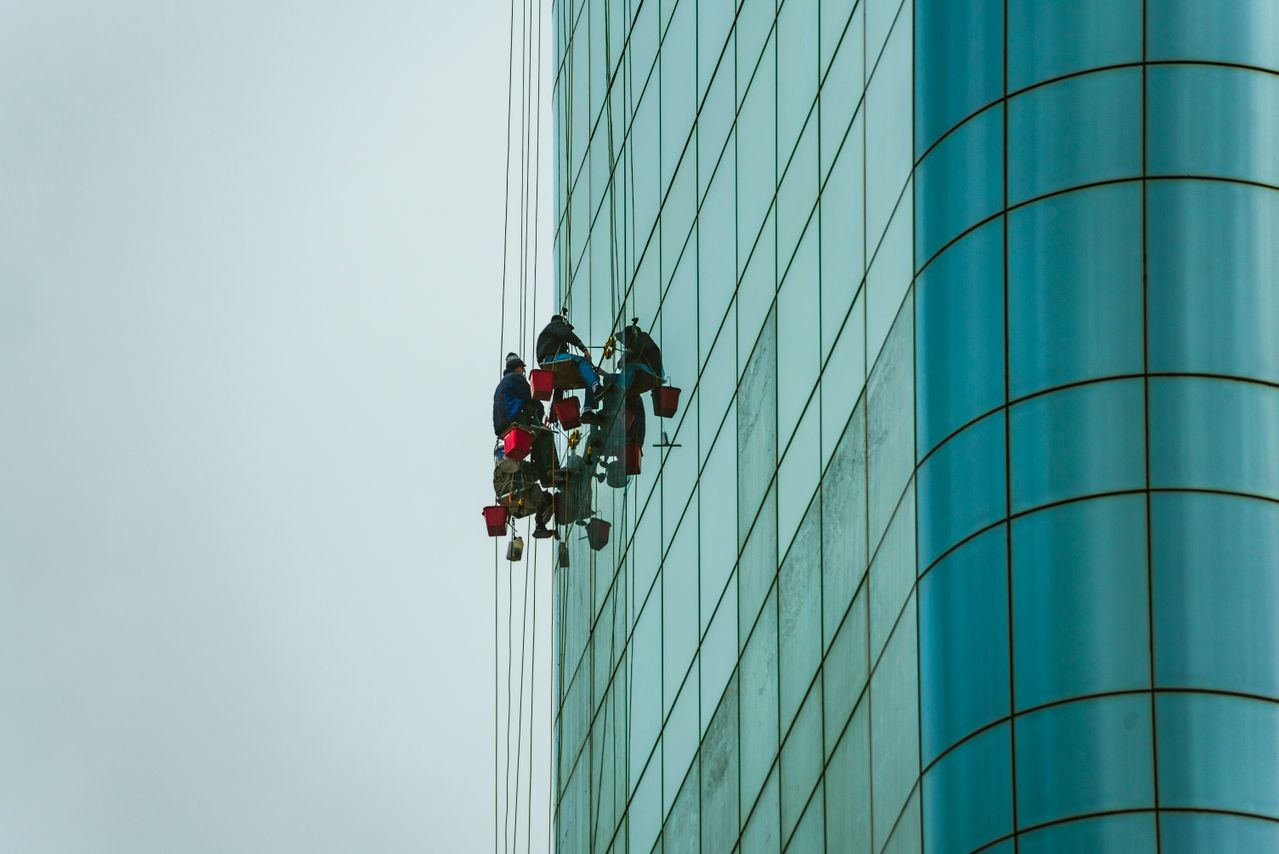
Facade cleaning refers specifically to cleaning the external cladding and surface materials of a building — glass, ACP panels, stone, concrete, metal — using methods suited to those materials. It is typically a skilled, specialist service, especially for tall buildings where access equipment or rope access techniques are needed.
Exterior building cleaning is a broader term. It can mean facade cleaning, but it can also include cleaning of other external building elements — rooftops, parking decks, pathways, canopies, external staircases, boundary walls, and so on. Think of it as everything on the outside of a building, not just the walls.
One Line Summary
Facade cleaning is a subset of exterior building cleaning. All facade cleaning is exterior cleaning — but not all exterior cleaning is facade cleaning.
What Facade Cleaning Covers
Facade cleaning focuses on the vertical external surfaces of a building — the parts that form the outer skin or cladding. This includes:
- Glass curtain walls and glazed panels
- ACP (Aluminium Composite Panel) cladding
- Natural stone surfaces — granite, marble, sandstone, limestone
- Concrete surfaces — both painted and bare
- Brick facades
- Metal cladding and composite panels
- EIFS / external insulation and finish systems
The key characteristic of facade cleaning is that it requires material-specific methods. You cannot use the same pressure or the same cleaning agents on glass as you would on concrete, or on natural stone as you would on ACP panels. Getting this wrong can damage the surface permanently.
For tall buildings — anything above 3-4 floors — facade cleaning also requires specialist height access: rope access systems, gondola rigs, or scaffolding. This is where IRATA certification becomes important. To understand more about why facade cleaning is a specialist service, read our post on what facade cleaning services are and why they matter.
What Exterior Building Cleaning Covers
Exterior building cleaning is a wider scope. In addition to the facade, it typically includes:
- Rooftop cleaning — removing debris, moss, pooled water residue, and drainage maintenance
- Parking structure cleaning — multi-level car parks, ramps, stairwells
- External walkways and pathways — pavement cleaning, pathway washing
- Canopies and overhangs — undersides of covered entrances and walkways
- Boundary walls and compound walls — cleaning of perimeter walls and gates
- Drainage and gutter cleaning — external drainage systems, downpipes
- Podium and terrace areas — outdoor decking, planters, feature walls
- External fixtures — signage, light fittings, security camera housings
Side by Side: The Key Differences
| Aspect | Facade Cleaning | Exterior Building Cleaning |
|---|---|---|
| Scope | External wall cladding and surfaces only | All external building elements including non-wall areas |
| Skill level | High — material-specific expertise required | Varies — some elements need specialists, others do not |
| Access equipment | Often requires rope access, gondola, or scaffolding | Depends on scope — some work is at ground level |
| Methods used | Soft wash, pure water, chemical treatment, rope access | High-pressure washing, manual cleaning, scrubbing |
| Risk of damage if done wrong | High — wrong method can permanently damage glass, stone, ACP | Lower in most cases — concrete and paving are more forgiving |
| Typical cost | Higher per sqft due to skill, equipment, and safety requirements | Lower for ground-level work; higher for rooftop or height access |
| Certification needed | IRATA for high-rise rope access work | Not always required unless working at height |
Which One Does Your Building Need?
This depends on what you are trying to achieve:
You Need Facade Cleaning If:
- Your glass panels look hazy or streaked
- ACP cladding looks dull, oxidised, or stained
- Stone or concrete walls have biological growth
- The building walls look visibly dirty from the street
- You have a high-rise or mid-rise building
- You need material-specific treatment
You Need Broader Exterior Cleaning If:
- Parking areas and ramps need washing
- Rooftop drainage is blocked or dirty
- External pathways and pavements need cleaning
- Compound walls and gates look neglected
- Canopy or entrance areas are grimy
- You want a complete external refresh
For most commercial buildings, the answer is both — but the facade is typically the priority because it is the most visible part of the building and the most susceptible to damage from the elements.
Can One Company Do Both?
Yes — and it is usually more efficient to use the same company for both if they have the capability. A company that does facade cleaning can typically handle the broader exterior work as well, especially if they have rope access teams and high-pressure equipment already on site. Coordinating a single vendor reduces mobilisation costs and ensures consistent quality across the whole project.
At Solitaire, we handle both facade cleaning and broader exterior building cleaning. Whether you need just the facade sorted or a full exterior refresh — Noida, Delhi, or Gurgaon — we can assess what is needed and give you a clear quote.
A Note on Terminology
Different contractors use these terms differently. Some companies use "exterior cleaning" to mean only facade work. Others use "facade cleaning" to mean the whole building exterior. When you get quotes, it is worth confirming exactly what the scope includes. Ask specifically: does this include the rooftop? The parking? The pathways? That way you know exactly what you are comparing.