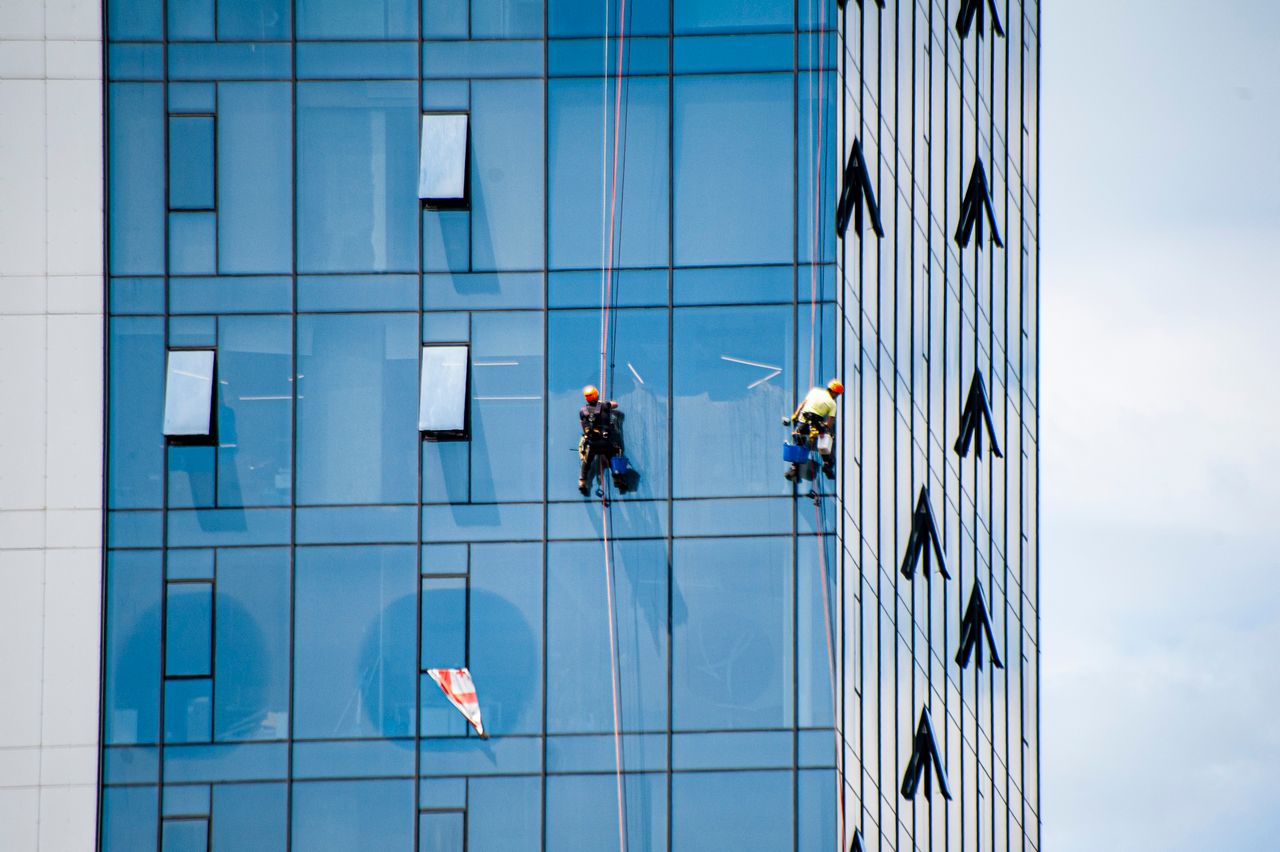
Most people think of facade cleaning as something you do when a building starts looking bad. A cosmetic fix. Something you might do before a big client visit or an annual audit. But that view misses the bigger picture.
The real reason to clean building facades regularly is not about appearance — it is about protection. Dirt, biological growth, pollution deposits, and moisture trapped in an unclean facade are actively working to degrade your building's materials every single day. Regular cleaning removes these damaging agents before they cause structural harm. And the difference that makes to a building's lifespan is significant.
In this post we will walk through exactly how this works — the specific damage mechanisms that cleaning prevents, and what it actually means for the long-term condition of your building.
The Problem: What Is Actually Happening on Your Facade?
When we look at a dirty building, we tend to see dust and grime. But what is actually sitting on that facade is far more complex and potentially damaging than it looks.
Moisture Retention
Dirt layers trap moisture against wall surfaces, keeping them wet far longer than they should be after rain.
Biological Growth
Algae, moss, lichen, and mould anchor themselves into surface pores and expand, physically breaking apart material.
Acid Deposits
Vehicle exhaust and industrial pollution create mildly acidic films that slowly dissolve stone, concrete, and metal surfaces.
Salt Crystallisation
Dissolved salts from water or pollution enter material pores and crystallise as they dry, creating internal pressure cracks.
Each of these is a slow, cumulative process. In isolation, none of them causes serious damage in a short time. Together, compounded over years of neglect, they can substantially shorten a building's useful life and lead to repair costs far greater than what regular cleaning would have cost.
How Biological Growth Damages Building Materials
Algae, moss, and lichen are among the most underestimated threats to building facades — especially in India's humid climate. Here is what actually happens when biological growth is left unchecked on a facade:
Algae — The First Coloniser
Algae are often the first organisms to take hold on a wet or damp facade surface. They appear as green or black streaks and patches. While algae themselves do not mechanically damage surfaces the way moss does, they create a thin biofilm that retains moisture and provides a substrate for more aggressive organisms to follow. They also contain mild organic acids that slowly etch into porous materials like concrete and stone.
Moss — The Mechanical Disruptor
Moss is more dangerous than algae. Its root-like structures (called rhizoids) physically penetrate surface pores and cracks, expanding as the plant grows. This mechanical action widens existing cracks and creates new micro-fractures in concrete, stone, and brick. Moss also holds moisture extremely effectively — a moss-covered wall can remain damp for days after rain, greatly accelerating weathering and material decay.
Lichen — The Long-Term Threat
Lichen is a combination of algae and fungi. It is the most aggressive of the three when it comes to surface damage. Lichen produces organic acids that directly dissolve calcium compounds in stone, concrete, and certain mortars. On natural stone facades — marble, granite, sandstone — lichen can cause irreversible surface etching that cannot be repaired, only replaced.
Key Point
Once biological growth has penetrated deep into porous facade materials, simple surface cleaning is no longer sufficient. You need specialist biocide treatment followed by sealing. Prevention — through regular cleaning — is far cheaper than treatment at this stage.
How Pollution Accelerates Facade Degradation
Indian cities have some of the highest air pollution levels in the world. This is not just a health issue — it directly affects buildings. The pollutants that land on building facades include sulphur dioxide, nitrogen oxides, and particulate matter from vehicle exhausts and industrial activity.
When sulphur dioxide and nitrogen oxides mix with water (from rain or condensation), they form weak sulphuric and nitric acids. These acids react with calcium-based materials — limestone, sandstone, concrete, and mortar — causing a process called sulphation. The calcium compounds are converted into calcium sulphate (gypsum), which is softer and more water-soluble than the original material. This leads to surface erosion and loss of structural integrity over time.
On metal surfaces — steel frames, aluminium cladding, ACP panels — pollution deposits accelerate oxidation and corrosion. On glass, they cause permanent etching if left for extended periods.
Our blog on how pollution affects building facades in Indian cities covers this topic in more depth, with specific data on Delhi NCR's pollution levels and their impact on buildings.
The Role of Water in Long-Term Facade Damage
Water is the common thread in most facade deterioration processes. When a facade is kept clean, water runs off quickly after rain — the surface dries fast and remains in good condition. When a facade is dirty, several problems develop:
- Dirt layers hold water against the surface, extending the period during which the material is wet and vulnerable
- Blocked drainage channels — in heavily soiled facades, debris accumulates in expansion joints and drain channels, causing water to pool instead of running off
- Compromised sealant — dirt and biological growth degrade the sealant around windows, cladding panels, and joints, eventually allowing water ingress into the building structure
- Freeze-thaw cycles — water that has penetrated micro-cracks expands when temperatures drop, widening those cracks over multiple cycles
Specific Facade Materials and How Cleaning Protects Them
Glass Facades
Glass is harder than it looks, but it is not immune to damage. Hard water deposits (from mineral-rich water) and acidic pollution etch permanently into glass surfaces over time. Once etching occurs, the glass cannot be restored without specialist polishing — which is expensive and not always fully effective. Regular cleaning removes deposits before they bond chemically with the glass surface, extending its clarity and useful life by many years.
ACP (Aluminium Composite Panel) Cladding
ACP panels are widely used on commercial buildings across Noida, Delhi, and Gurgaon. They have a painted or coated outer surface that is durable but not indestructible. Pollution deposits and UV exposure gradually degrade the coating — a process called chalking or oxidation. Regular cleaning removes the surface contaminants that accelerate this process. Properly maintained ACP cladding can last 20-25 years. Neglected ACP may need replacement in 10-12 years.
Concrete and Painted Facades
Bare or painted concrete is porous. Dirt, algae, and moisture penetrate the surface over time. When paint is applied over a dirty or biologically contaminated surface, it blisters and peels faster. Regular cleaning ensures the substrate is clean when repainting is done, extending the life of each paint coat significantly. It also prevents the deeper penetration of water and contaminants that leads to concrete spalling and rebar corrosion.
Natural Stone
Granite, marble, sandstone, and limestone facades are found in premium residential and heritage buildings. Natural stone is porous and highly susceptible to acid damage from pollution and biological growth. Regular cleaning with pH-neutral, stone-safe products removes harmful deposits without damaging the stone itself. Neglected stone facades can suffer irreversible surface loss within a decade in India's climate.
The Real Cost Comparison: Cleaning vs Repair vs Replacement
This is where the financial case for regular facade cleaning becomes very clear.
| Action | Approximate Cost | Frequency |
|---|---|---|
| Regular facade cleaning (per sqft) | ₹18–45 | Every 6–12 months |
| Biocide treatment for heavy biological growth | ₹60–120 per sqft | When needed |
| Sealant replacement around facade joints | ₹150–300 per running metre | Every 5–8 years if maintained |
| Concrete repair (spalling, cracks) | ₹500–2,000 per sqft | When damage occurs |
| ACP panel replacement | ₹800–2,500 per sqft | Major cost, avoidable |
| Glass etching restoration | ₹400–1,200 per sqft | Often only partially effective |
The numbers make the case clearly. A building that invests ₹18-45 per sqft in regular cleaning avoids repair and replacement costs that are 10 to 50 times higher. Across a large commercial building, the difference in long-term maintenance costs between a properly maintained facade and a neglected one can run into crores of rupees.
Signs That Damage Is Already Starting
If you are not sure whether your building's facade has already begun to show the effects of inadequate maintenance, read our detailed guide on signs your commercial building needs facade cleaning. It covers the specific visual indicators that tell you cleaning — or more urgent intervention — is needed.
How Often Should You Clean to Protect Your Building?
The right frequency depends on your building's location, facade material, and local pollution levels. As a general framework:
- High-pollution areas (near main roads, construction zones, industrial areas) — every 4-6 months
- Standard commercial buildings in urban areas — every 6-12 months
- Residential buildings in relatively cleaner areas — once a year
- Buildings with visible biological growth — immediate treatment, then regular cleaning going forward
The most practical approach for commercial property managers is an Annual Maintenance Contract (AMC) — regular cleaning is scheduled in advance, costs are predictable, and the building is never allowed to reach a state where remedial rather than preventive work is needed.
The Simple Rule
Think of facade cleaning the same way you think of engine oil changes for a car. You do not wait for the engine to start failing before you change the oil. You follow a schedule because you know that regular maintenance prevents much larger problems. Building facades work the same way.
In Summary
Facade cleaning extends building lifespan by removing the agents — biological growth, pollution acids, trapped moisture, salt deposits — that actively degrade building materials. Left unchecked, these processes cause increasingly expensive damage: from surface etching and paint failure, to cracked concrete, water ingress, corroded metal frames, and ultimately structural compromise.
The cost of regular cleaning is a fraction of what remedial work costs. More importantly, some forms of damage — etched glass, lichen-damaged stone, corroded metal — cannot be fully reversed. Prevention is the only strategy that actually works.
If you are in Noida, Delhi, or Gurgaon and looking for professional facade cleaning services, we offer free site visits with honest assessments. No pressure, no upselling — just an honest look at what your building needs and what it will cost.