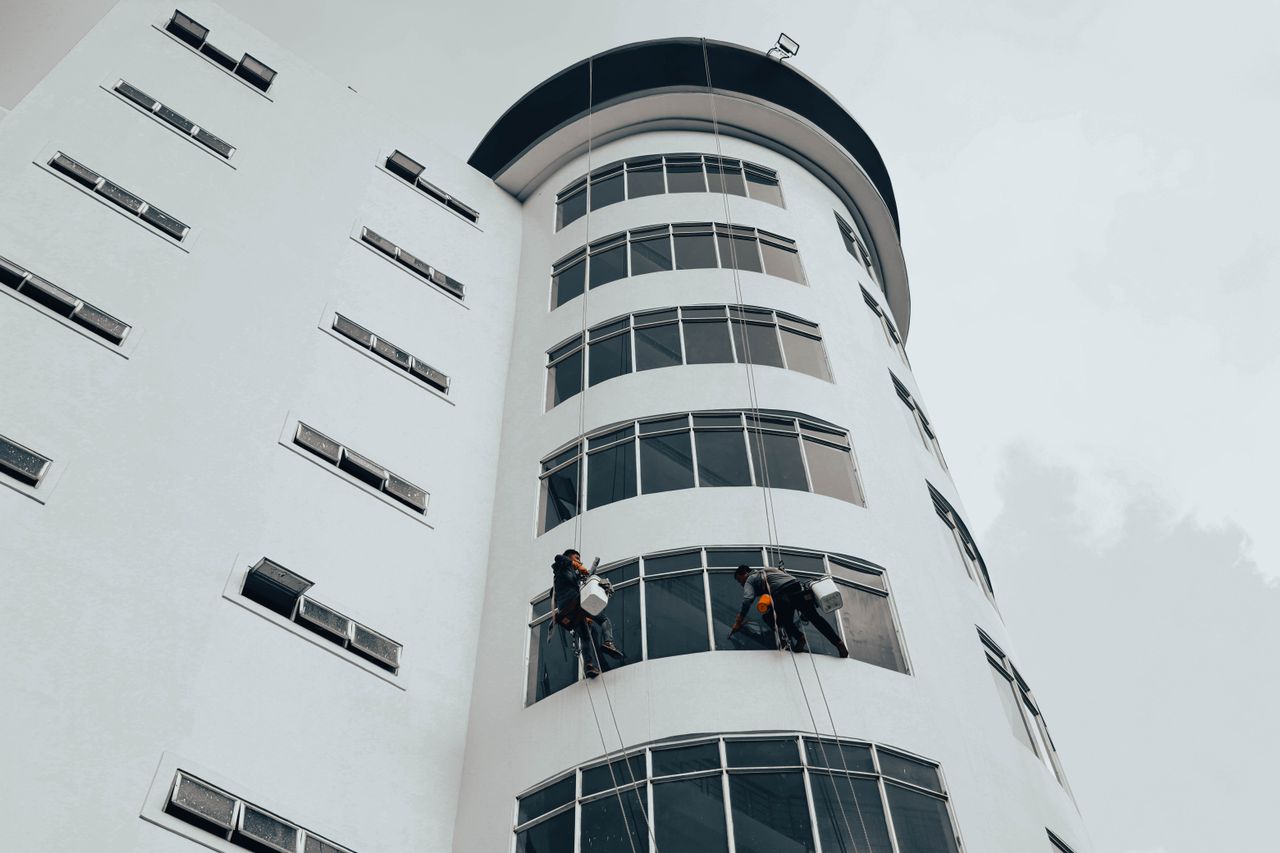
Facade cleaning is one of those maintenance tasks that is easy to push down the priority list. There is always something more urgent — a broken AC, a leaking pipe, a compliance deadline. The building walls can wait.
But here is the thing: while the walls wait, they are losing value. The dirt builds up. Biological growth gets a foothold. Pollution bakes into the surface. What would have been a straightforward cleaning job becomes a remediation project.
For businesses that own or manage commercial buildings, regular facade cleaning delivers a set of genuine, measurable benefits — not just aesthetic ones. Here are the eight most important.
8 Real Benefits of Regular Facade Cleaning
1. Better First Impressions — Every Single Day
Your building's facade is the first thing clients, candidates, and visitors see. Before they meet your team or see your product, they have already formed an impression based on the building. A clean, well-maintained facade says that you are organised, professional, and pay attention to detail. A grimy, stained facade raises doubts — even subconsciously — about the quality of what is inside. In a competitive business environment, first impressions are not a soft metric. They affect real decisions.
2. Higher Property and Rental Value
Commercial property in NCR cities is valued partly on appearance and maintenance standards. A well-maintained building commands better rental rates, attracts better quality tenants, and holds its value more effectively than a neglected one. We have seen this directly with clients who manage multiple properties — the ones that get regular facade cleaning have fewer vacancies and higher per-sqft valuations. The cost of cleaning is small relative to the rental premium it helps maintain.
3. Protection of the Building Structure
This is the benefit that building owners underestimate most. Facade cleaning is not just about looks — it is about protection. Dirt, algae, moss, and pollution deposits actively damage facade materials over time. Biological growth penetrates surface pores and widens cracks. Pollution acids etch into stone and concrete. Moisture trapped by dirty surfaces accelerates corrosion and water ingress. Regular cleaning removes these damaging agents before they cause structural harm. For the full technical detail, read our post on how facade cleaning extends building lifespan.
4. Lower Long-Term Maintenance Costs
Prevention is always cheaper than cure. Regular facade cleaning at ₹18-45 per sqft prevents damage that costs 10-50 times more to repair. Replacing ACP cladding costs ₹800-2,500 per sqft. Repairing concrete damage runs ₹500-2,000 per sqft. Glass etching restoration — if it is even possible — costs ₹400-1,200 per sqft. These are not hypothetical numbers. They are the costs that come up when maintenance has been deferred too long. A consistent cleaning schedule eliminates most of them.
5. Better Employee Experience and Productivity
People notice their environment, even if they do not consciously comment on it. Working in a building that looks clean and well-maintained affects how employees feel about coming to work — and by extension, how they feel about the company. Conversely, a building that looks grimy and neglected subtly signals that standards are low. Research on workplace environment consistently links physical surroundings to employee morale and productivity. A clean facade is one part of that larger picture.
6. Healthier Environment Around the Building
Biological growth on building facades — algae, mould, lichen — is not just a surface issue. Mould spores and algae particles become airborne and affect air quality in the immediate vicinity of the building. For buildings where windows open, or where outdoor air handling is involved, this can directly affect the people inside. Regular facade cleaning removes biological growth before it spreads and before it begins releasing spores. This is particularly relevant for buildings near to schools, hospitals, or residential areas.
7. Compliance and Liability Management
Building maintenance standards are increasingly formalised in India — both through local municipal regulations and through property management agreements. Neglected facades can lead to compliance issues during inspections. More practically, if loose or degraded facade material causes an incident — a panel falling, debris injuring someone — the liability consequences can be serious. Regular professional cleaning includes a visual inspection of the facade, which often catches early signs of material deterioration before they become safety issues.
8. Sustainability and Environmental Responsibility
This benefit matters more to some businesses than others, but it is real. Maintaining building facades regularly extends the life of facade materials — meaning less replacement, less waste, and less manufacturing of new cladding, glass, and panels. For businesses with ESG commitments or sustainability certifications (LEED, GRIHA), regular building maintenance is part of demonstrating responsible stewardship of built assets. Using eco-friendly, biodegradable cleaning products — as we do — also means the cleaning process itself has a minimal environmental footprint.
The ROI Question
If you want to think about facade cleaning purely in financial terms: a building owner who spends ₹3-5 lakhs per year on regular facade cleaning for a large commercial building is protecting an asset worth tens of crores. They are maintaining rental income, avoiding repair costs, and extending the functional life of expensive facade materials. By any reasonable calculation, the return on investment is strongly positive. The businesses that recognise this tend to treat facade cleaning as a standard line item in their facility budget — not an optional extra.
What Regular Means in Practice
The right cleaning frequency depends on your building's location and facade material. In NCR cities, most commercial buildings benefit from professional facade cleaning every 6-12 months. Buildings in high-pollution corridors or near ongoing construction may need it every 3-4 months.
The most practical approach for most businesses is an Annual Maintenance Contract — a fixed schedule agreed in advance, with predictable costs and no need to remember to book cleaning every time. Your facility team has one less thing to manage, and your building is always in good condition.
If you are not sure your building currently shows any of the signs that cleaning is overdue, check our post on signs your commercial building needs facade cleaning for a practical checklist.